In the high-octane world of Information Technology, the “system” that often requires the most urgent troubleshooting is the human body. Between back-to-back sprints, marathon debugging sessions, and the constant glare of blue light, IT professionals often operate in a state of chronic “functional overload.”
While a weekend getaway or a Netflix binge provides a temporary “system restart,” true restoration requires a deep-level “disk cleanup.” This is where Panchakarma, the ancient Ayurvedic science of detoxification and rejuvenation, offers a sophisticated protocol for modern-day professionals.
The “Bug” in the System: Why IT Professionals Need Panchakarma
The sedentary nature of tech jobs, combined with high mental stress and irregular eating habits, leads to the accumulation of Ama (metabolic toxins). In Ayurvedic terms, the constant mental stimulation increases Vata Dosha (leading to anxiety and insomnia), while the heat of logical problem-solving and screen time can aggravate Pitta Dosha (causing burnout and acidity).
Common “System Errors” in IT Professionals:
- Computer Vision Syndrome: Dry eyes and blurred vision from screen glare.
- Repetitive Strain Injuries (RSI): Neck stiffness (Cervical Spondylosis) and Carpal Tunnel Syndrome.
- Digestive Disruptions: IBS, bloating, and erratic appetite due to irregular meal timings.
- Mental Fatigue: Decision fatigue, brain fog, and “Tech-Insomnia.”
What is Panchakarma?
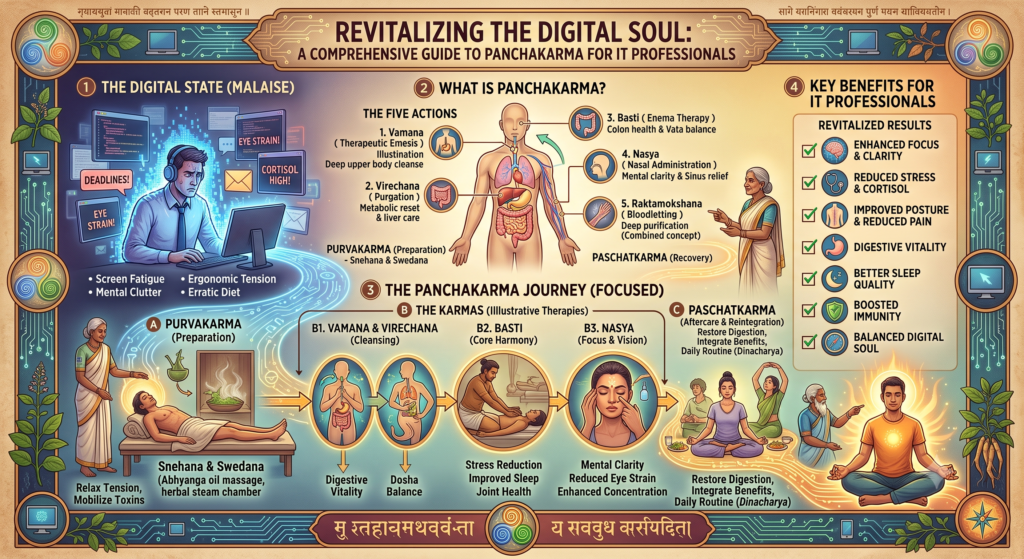
Panchakarma (literally “Five Actions”) is a bio-cleansing regimen designed to export toxins from the cellular level and rebalance the three fundamental energies (Doshas): Vata, Pitta, and Kapha. For an IT professional on a holiday, it acts as a Deep Hardware Maintenance for the body and mind.
Phase 1: The “System Diagnostics” (Purva Karma)
Before the deep cleanse begins, the body must be prepared. You cannot scrub a dry surface; you must first loosen the grime.
1. Snehana (Internal and External Oleation)
This involves the use of medicated ghees or oils.
- Internal: Consuming specific amounts of medicated ghee to “lubricate” the internal organs and loosen toxins.
- External (Abhyanga): A synchronized full-body massage using warm, herb-infused oils. For a tech professional, this specifically targets the tension held in the shoulders, lower back, and wrists.
2. Swedana (Sudation/Steam Therapy)
Following the oil massage, herbal steam is applied. This opens the pores and “liquefies” the loosened toxins, directing them toward the gastrointestinal tract for elimination. It is incredibly effective for relieving the physical stiffness caused by sitting in ergonomic (or non-ergonomic) chairs for 10 hours a day.
Phase 2: The “Core Cleanup” (Pradhana Karma)
Based on a practitioner’s assessment of your Prakriti (constitution), one or more of these five procedures are selected:
1. Virechana (Purgation Therapy)
This is the gold standard for Pitta-related issues. If your job involves high-pressure deadlines that leave you feeling “heated,” irritable, or suffering from acid reflux, Virechana cleanses the liver and gallbladder. It clears the “internal heat” and refreshes the digestive system.
2. Basti (Medicated Enema)
Considered the “Mother of all treatments,” Basti is the primary cure for Vata imbalances. Since Vata governs the nervous system, Basti is essential for IT professionals dealing with lower back pain, sciatica, anxiety, and tremors. It doesn’t just “clear the bowels”; it nourishes the nervous system at its root.
3. Nasya (Nasal Administration)
The nose is the gateway to the brain. In Nasya, medicated oils are administered through the nostrils.
- Why for IT? It is excellent for treating “Text Neck,” sinusitis, and headaches caused by prolonged screen use. It enhances mental clarity and improves “Prana” (life force) flow to the brain.
4. Vamana (Emetic Therapy)
Primarily for Kapha disorders (congestion, lethargy, weight gain). While less common for general “holiday” detoxes unless specifically indicated, it helps clear the respiratory tract and improves metabolic rate.
5. Raktamokshana (Bloodletting)
Used for chronic skin issues or severe blood-borne toxins. In a modern wellness context, this is rarely the focus for general rejuvenation but remains a powerful tool for specific inflammatory conditions.
Specialized “Tech-Add-ons” for the Professional
While the five actions are the core, certain “Upakarmas” (sub-treatments) are particularly beneficial for those in the tech industry:
Shirodhara: The Ultimate Brain Reboot
A continuous stream of warm medicated oil is poured over the forehead (the “third eye”).
- The Experience: It induces a state of deep relaxation similar to a “theta wave” meditative state.
- The Benefit: It is the most effective treatment for stress-induced insomnia and mental burnout. It literally “cools down” the overworked processor of your brain.
Netra Tarpana: The Screen-Care Protocol
A “pool” of medicated ghee is created around the eyes using a dough dam.
- The Benefit: It deeply lubricates the optic nerves and eye muscles, reversing the strain caused by high-resolution monitors and blue light.
Phase 3: “Rebooting the OS” (Paschat Karma)
The most common mistake people make is jumping back into a pizza and 5-hour Zoom call marathon immediately after Panchakarma.
Samsarjana Krama (Graduated Diet)
After the cleanse, your “Agni” (digestive fire) is like a tiny flicker. You begin with thin rice water (Manda), moving to thick rice soup (Peya), then to lentils and solid food. This “re-training” of the metabolism ensures that the benefits of the detox last for months, not days.
Rasayana (Rejuvenation)
Once the system is clean, you take specific “Rasayana” herbs (like Ashwagandha or Brahmi) which act as System Upgrades, enhancing immunity, memory, and cognitive endurance.
Planning Your “Panchakarma Holiday”
If you are an IT professional planning this during your leave, here is a suggested roadmap:
| Duration | Focus |
| Days 1-3 | Preparation: Light diet, Abhyanga, and Shirodhara to calm the nervous system. |
| Days 4-7 | Deep Cleansing: Intensive internal oleation and the primary procedure (e.g., Virechana or Basti). |
| Days 8-10 | Stabilization: Gentle recovery, Nasya for mental clarity, and Netra Tarpana for eye health. |
| Post-Holiday | Integration: Following the prescribed diet for at least one week after returning home. |
Tips for a Successful Detox
- Digital Detox: Panchakarma is significantly less effective if you are checking Slack during your oil massage. Put your devices in “Airplane Mode” for the duration of the core treatments.
- Hydrate with Warmth: Avoid ice-cold water. Warm water assists in the movement of toxins.
- Listen to the Body: You may feel tired during the process. This is the body redirecting energy from “outward action” to “inward healing.”
Conclusion
In the world of IT, we understand that hardware eventually wears out and software becomes bloated with “cache” and unnecessary “background processes.” Your body is the most sophisticated hardware you will ever own.
Taking a holiday to undergo Panchakarma isn’t just a luxury; it’s a Critical Maintenance Protocol. By flushing out the “Ama,” cooling the “Pitta,” and grounding the “Vata,” you return to your workstation not just rested, but optimized—ready to code, lead, and innovate with a refreshed vision and a resilient spirit.